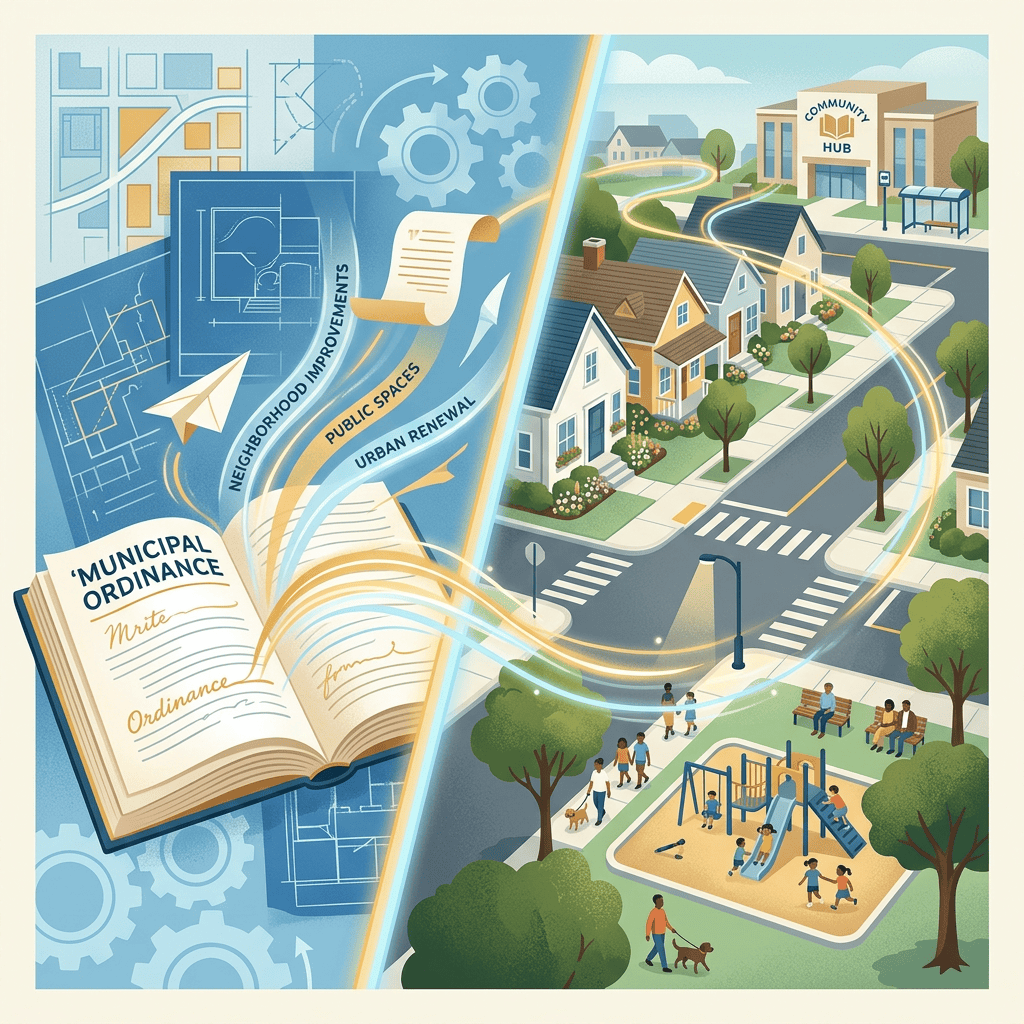
Across the United States, municipalities are reexamining how they regulate property maintenance, address deteriorating neighborhoods, oversee rental housing, and respond to emerging land uses. From revised property-maintenance ordinances and proactive rental-inspection programs to new zoning regulations and more sophisticated permitting systems, local governments are taking steps to strengthen their regulatory frameworks. These developments reflect an encouraging recognition that effective code enforcement plays an essential role in protecting public health, safety, property values, and overall community quality of life.
However, after more than 30 years of experience in municipal government, including code enforcement administration, departmental leadership, training, and consulting, I have come to appreciate one fundamental reality:
Adopting an ordinance does not automatically create an effective enforcement program.
The true test of any regulation is whether a municipality possesses the authority, personnel, procedures, resources, and organizational commitment necessary to implement it consistently and achieve the intended results.
The Gap Between Regulation and Implementation
Municipal governments frequently invest considerable time developing ordinances. Legal departments review language, planning commissions consider recommendations, elected officials conduct public hearings, and governing bodies ultimately adopt regulations intended to address community concerns.
Yet what happens after adoption is often where the real challenges begin.
Are enforcement officers adequately trained on the new provisions? Have inspection procedures been updated? Are violation notices consistent with the revised language? Does the permitting system accurately reflect new requirements? Have responsibilities been clearly assigned among Code Enforcement, Planning, Building, Fire, and other departments?
Perhaps most importantly, does the municipality have a reliable process for determining whether the regulation is achieving its intended purpose?
Without these considerations, even a well-written ordinance can become difficult to administer, inconsistently enforced, or ineffective in addressing the conditions it was designed to correct.
The effectiveness of an ordinance ultimately depends on the effectiveness of the system responsible for administering it.
Code Enforcement Is More Than Issuing Violations
One of the most persistent misconceptions about code enforcement is that departmental productivity can be measured primarily through the number of inspections conducted, notices issued, or citations written. These activities are important and should be documented. However, they represent only part of the enforcement process.
Consider two municipalities addressing similar property-maintenance concerns.
One municipality issues hundreds of citations but experiences recurring violations, prolonged case closures, and continued neighborhood deterioration.
Another municipality issues fewer citations but achieves higher voluntary compliance, resolves dangerous conditions more quickly, and experiences fewer repeat violations.
Which program is more effective?
The answer should be evident.
Enforcement activity is not necessarily the same as enforcement effectiveness.
Successful programs should measure outcomes such as compliance rates, time required to correct violations, repeat offenses, successful abatements, reduction of dangerous structures, and improvements in neighborhood conditions. The objective is not simply to document what is wrong with a community. It is to establish a reasonable, lawful, and effective process for making conditions better.
The Growing Importance of Organizational Alignment
Another important development in municipal regulation is the increasing need for coordination among departments.
Code Enforcement rarely operates in isolation.
A complaint involving an illegally converted dwelling may require zoning research, permit verification, building inspections, and property-maintenance enforcement. A deteriorating multifamily property may involve Fire, Building, Code Enforcement, Legal, and housing agencies. A dangerous structure may require coordination involving inspections, administrative hearings, demolition contractors, finance, and cost recovery. When departments operate independently without clear communication and established responsibilities, enforcement becomes fragmented. Cases may be delayed, property owners may receive inconsistent instructions, and staff may be uncertain about who possesses authority to make particular decisions. Effective coordination does not mean eliminating departmental boundaries or assigning everyone the same responsibilities. It means ensuring that each department understands its role and how its work contributes to a coordinated municipal response.
The goal should be a unified regulatory process supported by clearly defined professional responsibilities.
This requires more than occasional meetings. It requires written procedures, reliable communication, shared information where appropriate, and management accountability.
A More Complete Definition of Success
Through my work as a municipal administrator, consultant, and educator, I have observed that the most effective enforcement programs share several characteristics. They understand their legal authority. They establish clear expectations. They train personnel to exercise sound professional judgment. They coordinate across departments. They recognize the value of voluntary compliance while maintaining the ability to take decisive enforcement action when necessary.
Above all, they understand that successful code enforcement is ultimately about people and communities.
A corrected violation may mean a family living in safer housing, a neighborhood relieved of a persistent nuisance, a dangerous building removed before someone is injured, or a property owner receiving the guidance necessary to achieve compliance.
These are the outcomes that matter.
As municipalities continue modernizing their regulatory frameworks, the challenge is not simply to adopt stronger ordinances. It is to build stronger systems capable of administering those ordinances fairly, consistently, and effectively.
The future of professional code enforcement will be defined not by how aggressively municipalities regulate, but by how effectively they translate regulatory authority into sustainable community improvements.
That requires informed leadership, professional education, sound administrative practices, and a commitment to continuous improvement.
Because ultimately:
Compliance is the objective. Enforcement is one of the tools used to achieve it. The true measure of success is the condition of the community after the work is done.
About the Author

Marcus C. Kellum, MM/PA, CCEA, is a municipal government consultant, professional educator, and code enforcement administrator with more than 30 years of experience in local government operations, regulatory administration, organizational leadership, and community development.
Through Metric One Training & Consulting, he provides professional training, operational assessments, organizational consulting, and regulatory compliance support to municipalities and government professionals both nationally and internationally.

